Archives
- 2026-06
- 2026-05
- 2026-04
- 2026-03
- 2026-02
- 2026-01
- 2025-12
- 2025-11
- 2025-10
- 2025-09
- 2025-03
- 2025-02
- 2025-01
- 2024-12
- 2024-11
- 2024-10
- 2024-09
- 2024-08
- 2024-07
- 2024-06
- 2024-05
- 2024-04
- 2024-03
- 2024-02
- 2024-01
- 2023-12
- 2023-11
- 2023-10
- 2023-09
- 2023-08
- 2023-06
- 2023-05
- 2023-04
- 2023-03
- 2023-02
- 2023-01
- 2022-12
- 2022-11
- 2022-10
- 2022-09
- 2022-08
- 2022-07
- 2022-06
- 2022-05
- 2022-04
- 2022-03
- 2022-02
- 2022-01
- 2021-12
- 2021-11
- 2021-10
- 2021-09
- 2021-08
- 2021-07
- 2021-06
- 2021-05
- 2021-04
- 2021-03
- 2021-02
- 2021-01
- 2020-12
- 2020-11
- 2020-10
- 2020-09
- 2020-08
- 2020-07
- 2020-06
- 2020-05
- 2020-04
- 2020-03
- 2020-02
- 2020-01
- 2019-12
- 2019-11
- 2019-10
- 2019-09
- 2019-08
- 2019-07
- 2019-06
- 2019-05
- 2019-04
- 2018-11
- 2018-10
- 2018-07
-
Finally the identification of predictive biomarkers of respo
2020-08-10
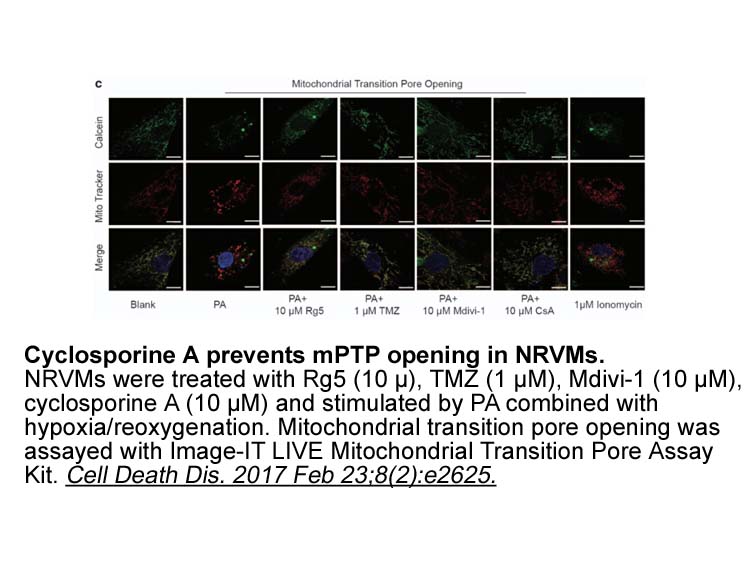
Finally, the identification of predictive biomarkers of response will also allow the more recently discovered CDK inhibitors to be explored in particular genetically-defined contexts, for example by building on recent observations that KRAS mutant tumors are highly sensitive to CDK1 inhibition, and
-
Some of the psychoactive actions of nicotine are
2020-08-10
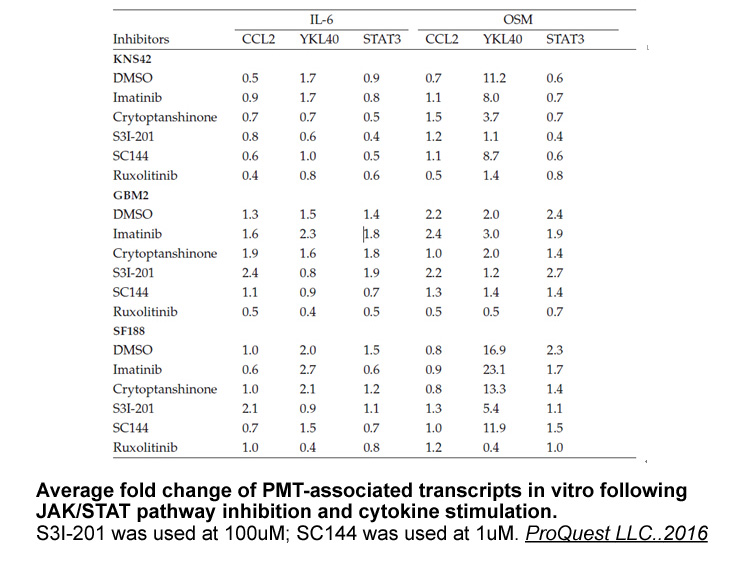
Some of the psychoactive actions of nicotine are mediated by the nigrostriatal and mesolimbic pathways (Di Chiara, 2000, Di Chiara et al., 2004). The nigrostriatal pathway originates in the dopaminergic neurons located in the substantia nigra and terminates in the putamen and nucleus caudatus which
-
The small molecule d mannuronic acid
2020-08-10
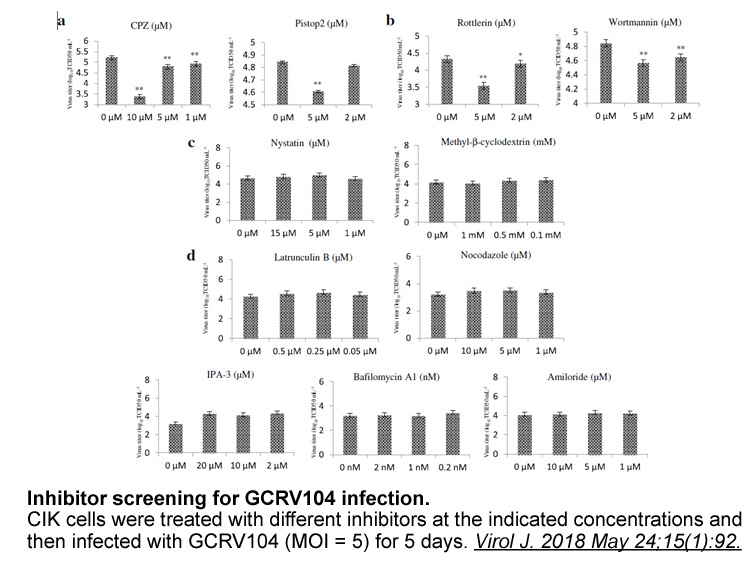
The small molecule β-d-mannuronic 92 3 (M2000), patented (DE-102016113018.4), has been tested as an anti-inflammatory and a novel immunosuppressive agent in various experimental models such as animal models of immune complex glomerulonephritis, nephrotic syndrome, multiple sclerosis and rheumatoid
-
46619 The proposed FDIR technique is presented in the follow
2020-08-10

The proposed FDIR technique is presented in the following format: Section 2 contains a survey of typical orbits of interest with regard to the 46619 environment found in them, which is contrasted with a LEO orbit. Additionally, how the requirements for the satellite system can be estimated is presen
-
br Experimental br Results and discussion
2020-08-10

Experimental Results and discussion Fig. 2 shows schematically the fundamentals of the developed HRP-P4-(P4)-anti-P4-Protein-G-MBs/SPCE immunosensor. Oriented immobilization of anti-P4 was accomplished onto Protein G-MBs due to the Protein G binding ability with the Fc region of many mammals i
-
GSK 4716 br Funding This work was supported by
2020-08-10
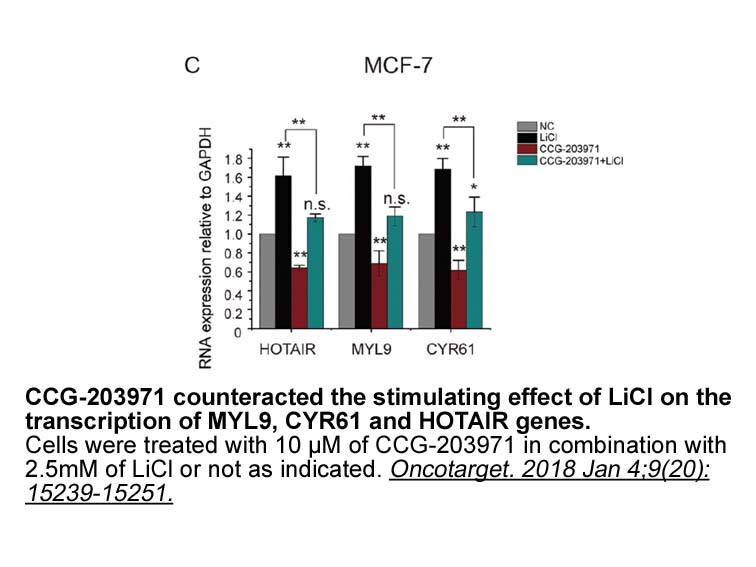
Funding This work was supported by the National Natural Science Foundation of China (grant number 81671411); Beijing Natural Science Foundation (grant number 7162062); Beijing Nova Program Interdisciplinary Cooperation Projects (grant number Z161100004916045); Beijing Municipality Health Technolo
-
Our previous high throughput screening HTS campaign
2020-08-10

Our previous high-throughput screening (HTS) campaign using automated, robust, and sensitive fluorescence based fccp mg assay [10], [11] led to the identification of several EPAC specific inhibitors (ESIs), and was subsequently followed by extensive hit-to-lead optimizations [20], [21], [22], [23],
-
In vitro studies suggest that cPLA
2020-08-10
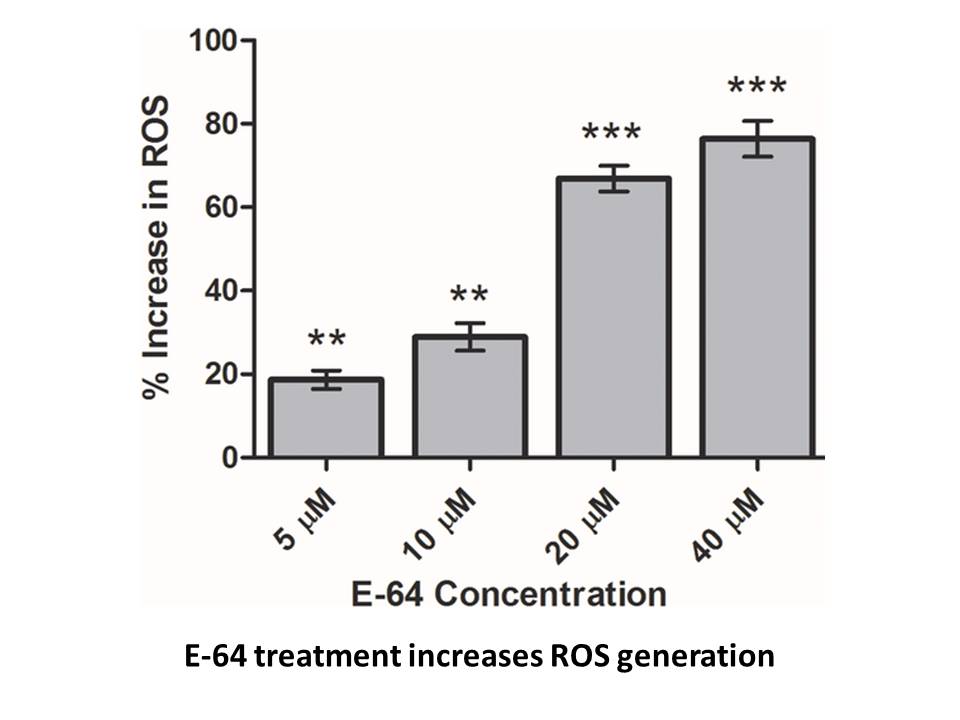
In vitro studies suggest that cPLA2α does not show clear preference for the headgroup present at the sn-3 position, although a slight preference for zwitterionic phospholipids such as PC and PE has recently been pointed out [24]. In this regard, mass spectrometry analyses of glycerophospholipid hydr
-
Enolases are among the most abundantly expressed cytosolic p
2020-08-10
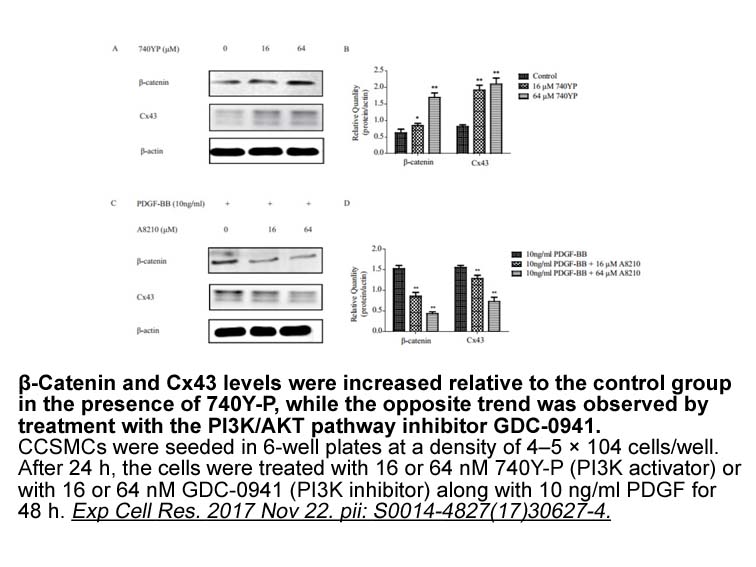
Enolases are among the most abundantly expressed cytosolic proteins. They are metalloenzymes that catalyze the conversion of 2-phosphoglycerate to phosphoenolpyruvate [18]. Eubacteria and archaebacteria have a single enolase gene (reviewed in [19]). Despite the lack of signal peptides or cognate pro
-
For these reasons molecules of the ET family and
2020-08-10
For these reasons, molecules of the ET family and in particular ET-1 are considered useful factors in the evaluation of malignancy and in consequence, in the prognosis for several forms of neoplasia, such as ovarian (Bagnato et al., 2005), prostate (Nelson et al, 1995, Nelson et al, 1996), colorecta
-
In conclusion we demonstrate that
2020-08-10
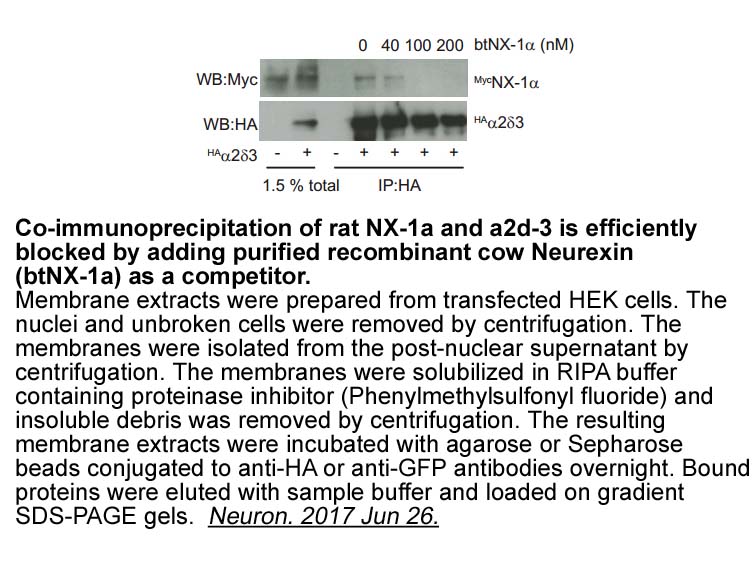
In conclusion we demonstrate that infection of salmon cells with ISAV induce the main branches of the cellular UPR machinery, but also one of its main negative regulators, GADD34. This is probably important for maintaining translation of interferon and interferon stimulated genes (ISGs), keeping ISA
-
br Conclusion In conclusion DNA methylation is a major epige
2020-08-08
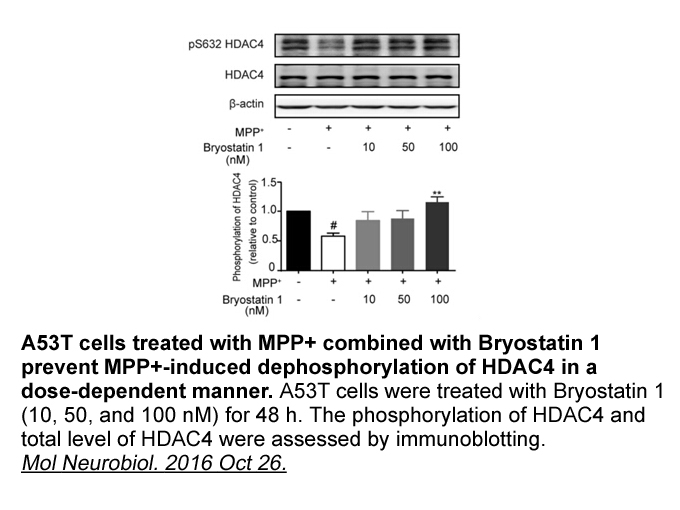
Conclusion In conclusion, DNA methylation is a major epigenetic mark, which regulates temporal and spatial expression of the testicular genes required for normal spermatogenesis process. There are two types of methylation, maintenance and de novo methylation, which are catalysed by DNMT1, DNMT3A
-
monocrotaline Activity profiles of fused bicyclic acid analo
2020-08-08
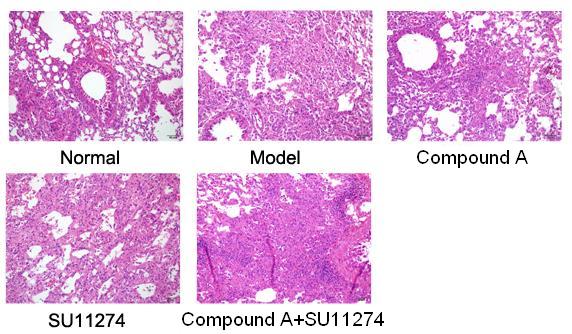
Activity profiles of fused bicyclic monocrotaline analogs are shown in Table 4. Analogs 12–14 showed weaker antagonist activity relative to the series of monocyclic acids 8–11, although they showed equipotency in their EP1 receptor affinity and better subtype selectivity. Phthalimide analog 12 show
-
E ligases have been associated
2020-08-07
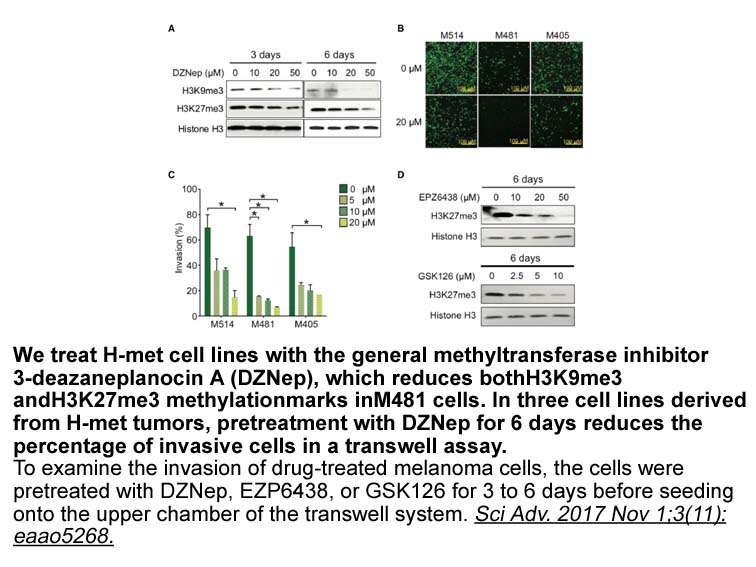
E3 ligases have been associated with a number of pathogenic mechanisms. Mutations in the E3 ligases MDM2, BRCA1, TRIMs, and Parkin have been linked to multiple cancers and neurodegenerative diseases (Fakharzadeh et al., 1991, Hatakeyama, 2011, Welcsh and King, 2001), and MDM2-p53 interaction inhibit
-
Adaptation to psychological or physiological stressful
2020-08-07
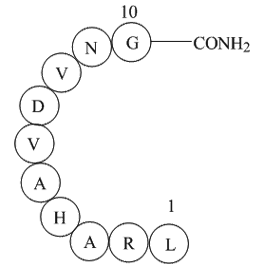
Adaptation to psychological or physiological stressful circumstances requires integration of behavioral, neuroendocrine, and autonomic responses to maintain homeostasis. The LC is regarded as a part of the central ‘stress circuitry’, which is robustly activated after stressful stimuli in experimenta
16051 records 794/1071 page Previous Next First page 上5页 791792793794795 下5页 Last page