Archives
- 2026-10
- 2026-09
- 2026-08
- 2026-07
- 2026-06
- 2026-05
- 2026-04
- 2026-03
- 2026-02
- 2026-01
- 2025-12
- 2025-11
- 2025-10
- 2025-09
- 2025-03
- 2025-02
- 2025-01
- 2024-12
- 2024-11
- 2024-10
- 2024-09
- 2024-08
- 2024-07
- 2024-06
- 2024-05
- 2024-04
- 2024-03
- 2024-02
- 2024-01
- 2023-12
- 2023-11
- 2023-10
- 2023-09
- 2023-08
- 2023-06
- 2023-05
- 2023-04
- 2023-03
- 2023-02
- 2023-01
- 2022-12
- 2022-11
- 2022-10
- 2022-09
- 2022-08
- 2022-07
- 2022-06
- 2022-05
- 2022-04
- 2022-03
- 2022-02
- 2022-01
br Methods br Results br Discussion First
2023-08-25
Methods Results Discussion First, the protease inhibitor isolated from non-PD TA tissue and PD plaque tissue were characterized. The results showed that both cell groups were positive for vimentin and negative for desmin suggesting that these cells were fibroblasts. It was also observed tha
The interaction of ATR ATRIP with RPA coated ssDNA is
2023-08-25
The interaction of ATR-ATRIP with RPA-coated ssDNA is sufficient for ATR-ATRIP recruitment to DNA lesions, but it is not sufficient to fully activate ATR. In response to DNA damage, the heterotrimeric ring-shaped complex 9-1-1 (RAD9-RAD1-HUS1 in humans; Ddc1-Rad17-Mec3 in S. cerevisiae) is loaded at
In response to DSB the lesion recognition factor
2023-08-25
In response to DSB, the lesion recognition factor Mre11-Rad50-Nbs1 (MRN) complex helps the recruitment of ATM to the damage site and its activation by phosphorylation [29]. However, whether UV-damage recognition factors directly influence ATR and ATM recruitment and their phosphorylation is not clea
The distribution and subcellular localization differs betwee
2023-08-25

The distribution and subcellular localization differs between the subtypes of mGlu receptors. Most mGlu receptors are broadly expressed in the brain, except for mGlu6, which is restricted to the retina. Some mGlu receptors are additionally found in glial cells, such as mGlu3 and mGlu5 (Aronica et al
Introduction The corpus luteum CL
2023-08-25
Introduction The corpus luteum (CL) is a transient endocrine gland that differentiates from the thecal and granulosal cells of the ovarian follicle after ovulation. Its formation and limited lifespan in the mammalian ovary is important for fertility, as the CL produces progesterone (P4), the essent
Formation of SAHFs in human
2023-08-25
Formation of SAHFs in human Valproic acid mg is a dynamic and multifaceted process that is largely dependent on the p16/pRB ras-induced senescence pathway [108]. Many details remain to be elucidated but formation appears to be driven by a complex of histone chaperones (HIRA and ASF1a), a pRB/hBrm/H
br Eprosartan The AT R antagonist
2023-08-25
Eprosartan The AT1R antagonist eprosartan is approved for the treatment of essential Phenformin and may be administered using a convenient once-daily regimen. The drug is a well-tolerated and effective antihypertensive agent with benefit in the secondary prevention of cerebrovascular events, ind
AAT enzyme activity was readily detected in crude cell
2023-08-25
AAT enzyme activity was readily detected in crude cell-free extracts obtained from berry tissues of all accessions but displayed different substrate selectivities (Fig. 2). Cell-free extracts derived from ‘Muscat Hamburg’ berries showed the highest AAT activity with all alcoholic substrates tested,
br Preliminary remarks Expression of the transcription facto
2023-08-25
Preliminary remarks Expression of the transcription factor aryl hydrocarbon receptor (AHR) and the AHR-repressor (AHRR) are both strikingly high in the NMS-1286937 sale of barrier organs skin and gut [1,2]. It is generally assumed that this reflects their role in linking environmental factors to
Adiponectin is an adipokine whose circulating level is
2023-08-24
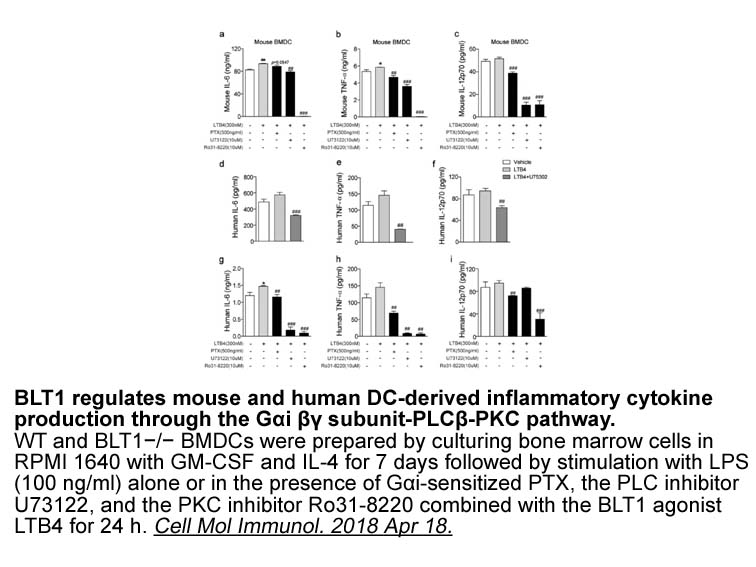
Adiponectin is an adipokine whose circulating level is depleted in a number of metabolic diseases including insulin resistance, diabetes and cancer (Khan et al., 2015, Singh et al., 2014a, Singh et al., 2014b, Yamauchi et al., 2014). Despite its importance in health and pathophysiology, adiponectin
br Materials and methods br Results br Discussion In this
2023-08-24

Materials and methods Results Discussion In this study, we have demonstrated that the adiponectin system (genes and proteins) is present in the porcine endometrium (epithelial glandular cells, luminal epithelial raf inhibitors and stromal cells) and myometrium (longitudinal and circular mus
All consecutive patients who were confirmatively diagnosed w
2023-08-24
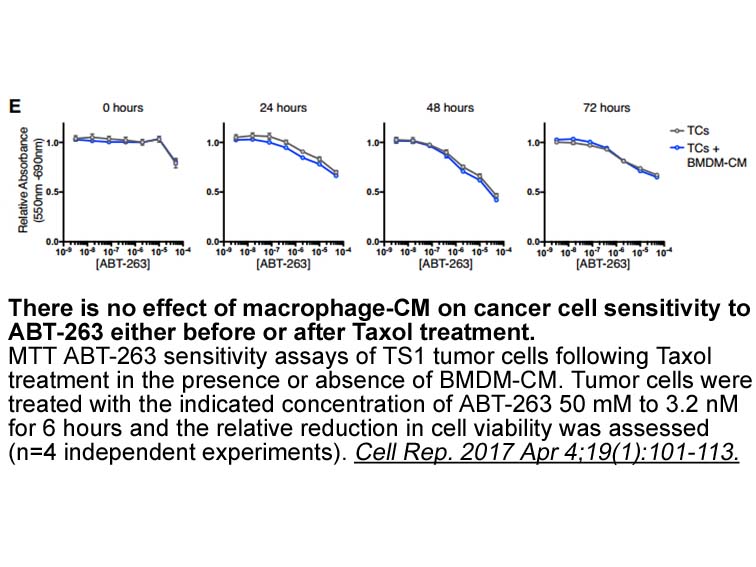
All consecutive patients who were confirmatively diagnosed with MP-PPE and TPE, respectively, between January 2008 and December 2016 at Kyungpook National University Hospital, a tertiary referral hospital in South Korea, an area with an intermediate prevalence of active tuberculosis, were enrolled.
Tissue distribution showed that ctrp was
2023-08-23
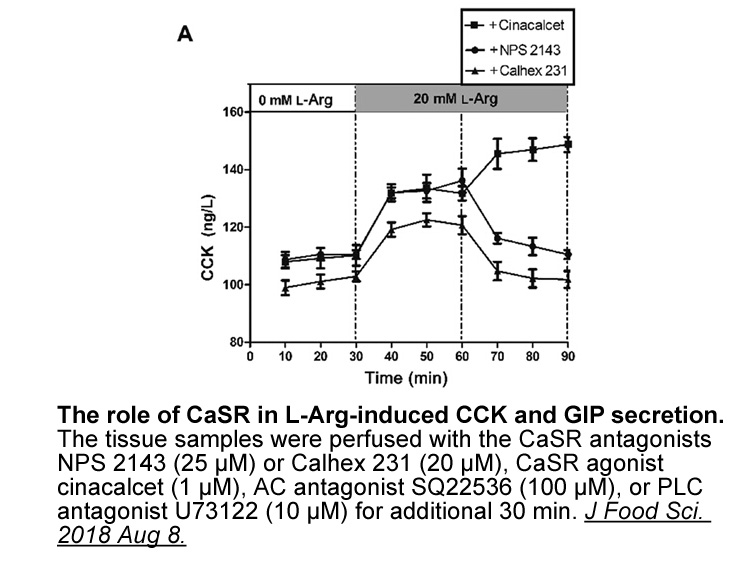
Tissue distribution showed that ctrp9 was abundantly expressed in the kidney of male and female tilapia. In mice, the Ctrp9 was identified in adipose tissue, and the expression levels were higher in females than that of males (Wong et al., 2009). Recent studies indicated that Ctrp9 was also expresse
br Materials and Methods br Results br Discussion Voluminous
2023-08-23
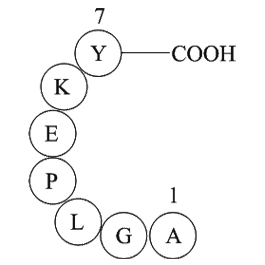
Materials and Methods Results Discussion Voluminous literature is available describing the regulation of Tenovin-6 homeostasis by central and peripheral mechanisms in poultry [35,36]. However, the neuroendocrine mechanism(s) of photoperiod induced hypothalamic regulation of food intake and
Adenosine is a ubiquitous homeostatic substance released fro
2023-08-23
Adenosine is a ubiquitous homeostatic substance released from most cells, including neurons and glias. Endogenous adenosine acts at four principal G-protein-associated receptor subtypes: A1, A2a, A2b and A3 (Ralevic and Burnstock, 1998). The stimulation of adenosine receptors by extracellular adenos
7786 records 325/520 page Previous Next First page 上5页 321322323324325 下5页 Last page